Loading...

NASA MicroG-NExT

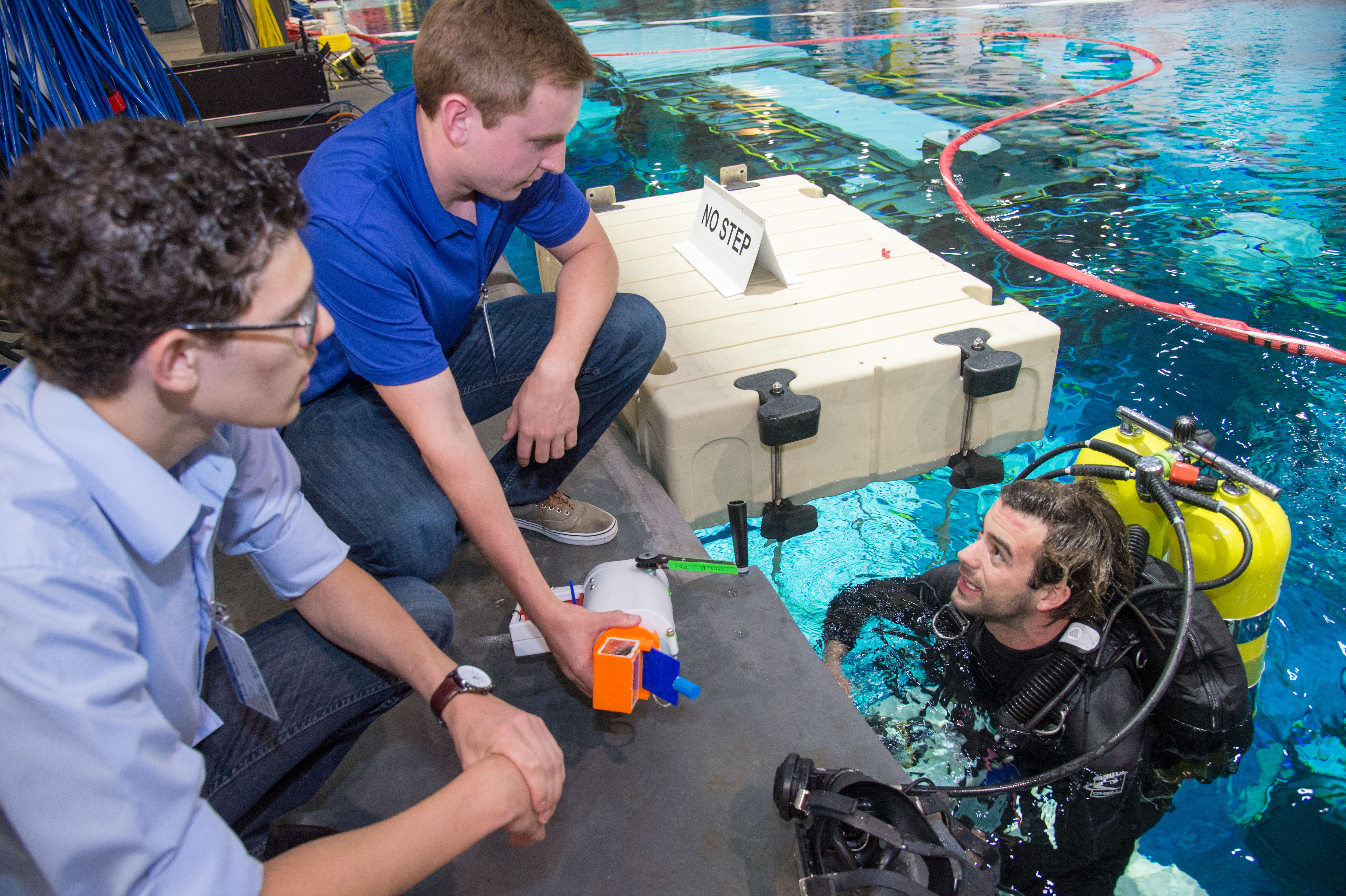
The Micro-g Neutral Buoyancy Experiment Design Teams (Micro-g NExT) program challenges undergraduate students to design build, and test a tool or device that addresses an authentic, current space exploration challenge. The overall experience included hands-on engineering design, test operations, and educational/public outreach. Test operations were conducted in the simulated micro-gravity environment of the NASA Johnson Space Center Neutral Buoyancy Laboratory (NBL). Our team among others proposed, designed and prototyped a tool necessary for space exploration missions. Professional NBL divers tested the tools as we directed the divers from the Test Conductor Room of the NBL facility.

Journey to NBL


The Challenge

In the near future, manned missions to the surface of asteroids will be essential to the exploration objectives at NASA. Not only will asteroid missions provide information about our vast universe, but they will also serve as an ideal test bed for future manned deep-space missions. The effectiveness of manned missions and the associated extra-vehicular activities (EVA) relies on the development of innovative EVA sample collection tools. The Micro-g NExT Rock-Chip Sampling Device challenge intends to gain a better understanding of how astronaut-conducted sample collection in micro-gravity environments can be made more efficient, reliable, and intuitive. Our tool was designed to create, collect and store rock chip samples. The video below shows our tool completing the challenge.

Our Tool
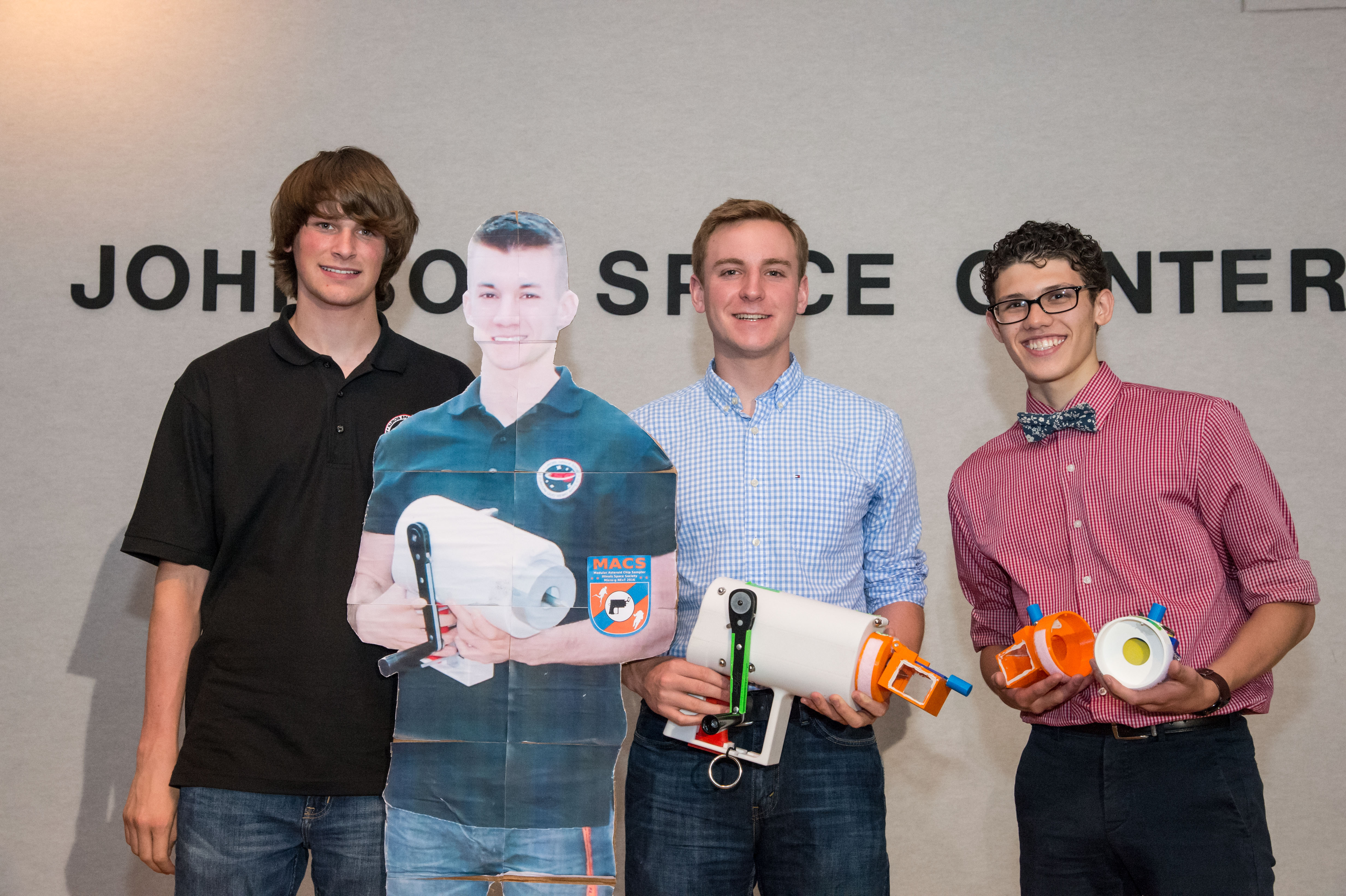
The Modular Asteroid Chip Sampler Tool (MACS) is a purely mechanical system that uses a hand-cranked spring mechanism to drive a chisel-bit into the surface of an asteroid. The force from the tool impacting the surface produces a chip sample that is directed into a modular canister that is then detach from the tip of the tool and then safely stowed in a collection bag. The MACS Tool utilizes separate modular containers to allow for sample collection at multiple sites without cross contamination. Using a combination of machined metal and 3D printed components, the MACS Tool is an appropriate balance of rapid production and testing with structural robustness. During testing, several design flaws were discovered and resolved in the final report.
View Final Report
The Team
The 2016 Illinois Micro-g team was my first university level engineering experience and looked back on fondly. The team consisted of Zachary Fester, Paul DeTrempe, David Salmi, Sarosh Hussain and myself. We all worked on the design and concept of the tool during our daily meetings. As the concept and design became more concrete, we broke into separate task. With this, I mostly worked on the proposal and reports while also completing the educational outreach portion of the challenge.